All posts by twa1313

The Mindfulness Conundrum

In the mid-2000s, as an elementary school teacher at a private school in Washington DC, I wholeheartedly bought into the teaching of mindfulness.  As the world sped up around us, parents and teachers grappled with emotionally fraught events like school shootings and climate disasters, not knowing how our children would respond; how they would cope.  Could they cope?  How do we talk about the news?  How do we make sense of that which is senseless? 

Mindfulness seemed like a solid way to help children compartmentalize and separate themselves from what parents and teachers alike knew was too much for young minds to handle.  Mindfulness is a way to check in with one’s body.  To realize that in this current moment we are not in danger and we are not in pain.  To briefly scan ourselves physically and mentally.  To let ourselves know that we are alright. In addition to mindfulness, yoga culture has taught us to be present, to focus on our breath, to scan our bodies for tension.  These are all good lessons. 

The practice forces the mind to be in the present; to block out external stimulation and focus on the self.  To recognize and validate internal stimuli and to drive away negative thoughts from past or future events that have no bearing on the now.  To take each moment as it comes without prejudice.  To clean the slate and start anew. 

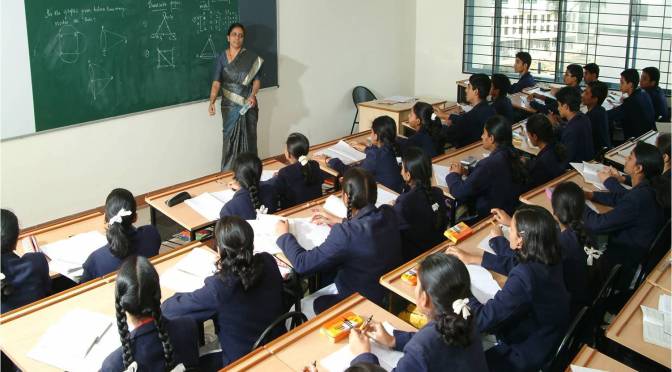
The practice also requires discipline and commitment.  It might seem trivial, but without commitment, it is not uncommon for one to feel silly and self indulgent.  To worry about what others might think.  Imagine, if you can, a classroom of fifth graders sitting in silence with eyes closed trying not to think about one another.  This scenario takes a lot of teacher preparation and conviction.  If teachers are not fully on board, the class has no chance.  It also requires teachers to be genuinely connected to their students.  Heart-felt conversations regarding the benefits of the practice and why it is important must be open and honest.  Only then will students trust that this strange activity is worth taking seriously. With regular practice and repetition even fifth graders can begin to see the benefits of being mindful.

Once mindfulness becomes a regular component of classroom life, it can be referenced when children are stressed.  Whether due to social anxieties or academic pressures, mindfulness can help children overcome discomfort and focus on moving towards resolution.  Whether this means forgiving or asking for forgiveness in social situations, or putting aside fear of failure in order to perform better in academic or sports related challenges, the result is the same- a more present, less distracted person ready to give their best. 

From a parent or teacher perspective this is the ideal.  Enable children to move past that which is petty, to focus on that which is truly important.  To cultivate deep impactful growth emotionally, socially, and academically. To foster relationships that are honest and healthy, and to move away from toxic emotions and interactions.

As a teacher who witnessed some of these benefits (I would be lying to say it fully worked all the time), I can realistically say that for a good portion of the students, mindfulness gave them a strategy for overcoming challenges that previously had been unaddressed.  A way for students to calm their minds before tests; to settle their nerves before performances; and to remove themselves from escalating social challenges. A way for students to gain perspective.

On the flip side of all of the benefits of mindfulness, are the outcomes of a more self-centered group.  As children become more adept at identifying and labeling their emotions, they become aware of what they need in order to engage in an activity.  Comments like, “I need a moment”, or “I need you to give me some space”, or “I need you to leave me alone” become common.  It’s also not uncommon to hear dueling “I needs” in heated social interactions.  

A playground interaction might go something like this:

“I need you to give me some space!”

“Well I need you to give me the ball!”

“I’m not giving you the ball, because I need to take my turn!”

“I just need you to play better!”

“I need you to shut up!”

While neither of these students is being mindful, they are certainly using the language of mindfulness to make the situation about them.

One important drawback of mindfulness is that it places focus on how an individual is feeling in any given situation.  This takes away focus on how others might feel.  In this way, mindfulness is in conflict with being thoughtful.  In this way, we have given tools to children to take care of themselves but not to take care of each other.

Fast forward to adulthood and the myriad different messages that people receive through media, whether social, network, or otherwise, create an environment where “different” is uncomfortable and therefore dangerous. It is not difficult to imagine how an uninformed and self-centered person might react in a situation they perceive to be uncomfortable.  This scenario is played out in universities and colleges where students faced with perspectives that differ from their own feel uncomfortable and perceive that discomfort as an affront to their safety.  “Your message makes me uncomfortable, therefore I need you to stop…” The idea that personal comfort is the highest priority is an unintended consequence of mindfulness.

Take the woman in central park who, for whatever reason, was terrified of black people.  When she came across a black man in the woods she “needed” him to go away so that she could feel safe.  Nevermind that he was a birdwatcher and had every right to be where he was, doing what he was doing.  He posed no threat to her whatsoever. She felt it necessary to call the police and have the threat removed.  Unfortunately for her, the police saw no problem with the man, a situation that in another time or place may have ended very differently. 

So, what is the solution to the mindfulness conundrum?  Thoughtfulness.  Being thoughtful means that an individual is concerned about the well-being of those around them.  While both mindfulness and thoughtfulness require an individual to be present in the moment, thoughtfulness requires the individual to think about how their actions and words might be interpreted by others.  To show concern for the safety and well-being of other people.  This is actually a huge shift from mindfulness.  It requires empathy and recognition that we are all in this together and that each of us has the right to be.  

While we do our best to teach compassion and thoughtfulness to children in schools, I believe that the mindfulness message echoed more loudly for those who needed it the least.  In other words, the tendency towards selfishness is more natural than the tendency for selflessness.  Those individuals who may have started out more focused on themselves really took the mindfulness lessons to heart and may have skipped the thoughtfulness aspects of school altogether.  I think about people that are drawn to ambitious pursuits such as business or politics.  Those individuals may be more susceptible to corruption in the guise of mindfulness.  It is not a huge leap to go from “I need some space” to “I need a new car…” or “I need you to do my bidding…”.

Thoughtfulness at the expense of the self, is not the goal. In fact, we need a blend of both mindfulness and thoughtfulness.  Some situations require more or less of each.  Ultimately, though, for society to function effectively, people need to err on the side of thoughtfulness.  To be compassionate.  To care for and about other people. 

I view mindfulness and thoughtfulness as opposing forces that need to remain in balance, like the bicep muscle and the tricep muscle; one pulls and the other pushes.  To be a good writer, one must read…a lot.  Pulling and pushing.  For a time in the mid 2000s, I believe we overworked the mindfulness muscle causing it to grow beyond the ability of the thoughtfulness muscle to pull it back.  I think it is time for us to begin flexing our thoughtfulness muscles a little more.
Closed-minded Children?

Are you an open-minded person?  How do you know?  I don’t know anyone who would admit to being closed-minded, but the law of averages would suggest that those people are out there.  You probably know a couple.  You might be one.  I might be one.


To have an open mind is to be self aware enough to know when you don’t know.  To admit to one’s self that there might be other perspectives yet to be considered.

Certainly, a mind is not either open or closed.  There are things for which I have made up my mind, and others where I might accept some discussion.  I think the question is more about how one approaches the world.  Do you tend to be a skeptic, or do you gaze upon the world in wonder.

I only ask these questions because recently it occurred to me that many of the things that parents and teachers do, encourage the closing of the mind.  We want our children to make decisions without all of the data.  We forget that children haven’t had that much experience being people yet, and we ask them questions like, “what do you want to be when you grow up?”  Knowing full well that they can’t possibly know all of the options, we ask them, “what is your favorite movie, or song, or even color.”    Questions like these only serve to end debate; to close discussion.

As adults we know that life is not a destination, but rather how we spend our time.  The experiences we accumulate broaden our perspectives and make us much more interesting to be around.   Knowing this, we can design our questions to focus on what is not yet known; and how grand it is when new information is gained.

“Did you know there are people whose job it is to inspect wind turbines?”  or “I wonder how many different jobs are involved in manufacturing an iPad?”  Rather than asking a child’s favorite flavor of ice cream, ask “what is the most interesting place you’ve ever eaten ice cream?”  or “what flavor of ice cream do you hope to never have to eat!”  OK, that one might be a little closed-minded.

The point is, (I think) that we frequently force binary conditions on children’s thinking.  It either is, or it isn’t.  You either know the answer or you don’t.  This puts a lot of emphasis on knowing, which is a closed-minded state, rather than learning, which is an open-minded state.   Standardized tests are designed to take a closed-minded snapshot of an individual at a specific moment.  There is certainly a time when this can be useful.  It is important, however, to remember to also evaluate one’s process for learning.  I think the process is far more valuable than either knowing or not.

But I’m open for discussion.


Educational Technology

In order to understand my view on educational technology, you first have to understand my own journey.  My employment history has shaped the way I think about this industry and how frequently, I think, technology is misused in the classroom.

After student teaching in a second grade classroom in semi-urban Denver, Colorado, I took my first teaching job as a 6th grade language arts teacher in rural Jacksonville, Florida.  I was approached by the principal, who asked me to manage the school’s new 32 station computer lab equipped with Josten’s Learning reading, writing, and math curricula.  The language arts curricula that I was to use, consisted of a Basic Skills Inventory, an online test that was supposed to place students into developmentally appropriate reading and writing lessons.  The curriculum had many cartoon type activities that were supposed to engage the students while diagnosing reading issues and helping them learn to read. Obviously it didn’t work.  But it was fun, and many of the students enjoyed going to the computer lab.

I was then hired by Jostens Learning to work with teachers in the Washington, DC schools to use the same curriculum with their students.  It was even less successful in DC, as many things are.  During my three years with Jostens, however, I started to think about why the curriculum was unsuccessful.  The reading curriculum basically replicated a basal reader with comprehension questions interspersed to continually check that the students were actually reading.  The curriculum failed for many of the same reasons basal readers continue to fail.  They do not actually replicate the beauty, intensity, and general joy of actual literature.  Nor do they challenge students to think deeply about the world in which they live, by experiencing life through the characters in the books. Yes, the activities were colorful, employed engaging sounds, and required the students to do stuff, rather than sitting passively. But the truth that we have come to know about literature is that reading is not passive, and doesn’t require “sprucing up” to make it interesting.  In fact, the fewer external distractions the better, when reading a good book.

So, how can technology help students interact with literature differently than just reading a book?  Hold on, I’m getting there.

I took a job as the director of technology for a small, private, K-8, independent school in Northwest DC.  I mention Northwest DC, because this neighborhood does not reflect the majority of the city.  Separated from the rest of the city by Rock Creek park on the east, the power center of K street on the south, the embassies and National Cathedral on the West, and Chevy Chase, Maryland on the North.  This part of town is wealthy, and so are the families that send their children to these private schools.

At this time I was tasked with teaching each grade “computers” and working with faculty to begin to integrate technology into their classrooms and their teaching. This is where the ideas really began to grow.

What does it mean to teach computers?  What does it mean to integrate technology?  Why are these goals that a school would value?  So I taught typing. This seemed like a good place to start.  I also added some content from various cds that came with the apple computers we bought.  This didn’t seem like a good use of these students’ time.  So I started meeting with teachers to find out what they were teaching.  Were there ways that I could supplement, or extend what they were doing in their classrooms that could some how increase student  understanding?  Science and math were good starting points.  Yes, data.  We will plot data.  We will build spreadsheets and look for trends.  Good.  What about the language arts curricula?  Fifth grade is studying Greek Mythology, and writing myths of their own.  Hmmm.  That sounds like fun.  What if we used Hyperstudio (multimedia authoring) to retell the myths.  That’s fun.  How does it help?  Well, they have to really understand the myths to retell them.  How will we know that they actually understand the myths rather than just spitting it back to us.  Well, what if we have them create alternate endings to the myths.  Like a “choose your own adventure” book.  And, what if the alternate endings have to reflect an understanding of other greek myths?  They might bring in other gods or goddesses.  This would really show whether or not they understood the unit.

This was a turning point in my thinking about the use of technology to help students think differently.  The Greek Mythology projects presented to parents and other classes, enjoyed a good deal of public success.  Other teachers came forward with similar project ideas.  This again made me rethink our “computer” teaching.  The next step was to put the computers in the classrooms themselves so that every class could try similar projects.

What followed was a proliferation of “Web-quests”, Power-points and documents. I was very frustrated with, what I assumed was a lack of creativity in the creation of technology enhanced lessons and units.  With that, I decided to leave the administration to go back into the classroom.  For the next ten years I taught fifth grade.  The classroom organization at this school consisted of two, full-time teachers and around 25 students.  We were responsible for teaching language arts, social studies, and basic home-room study skills type lessons.  We started with 13 wireless laptops (a ½ group’s worth) and a Smartboard with projector.

Shortly after moving back into the classroom I was hit with the reality of classroom teaching.  There is a lot to do.  There is a lot to teach.  Teaching with technology was a priority of mine, but it wasn’t a priority of the school’s.  This made things difficult.  I had to concede that my previous frustration towards teachers had been, perhaps, misplaced.  Over the next few years, I was so focused on being a good teacher, that using technology to enhance my teaching took a back seat.  We still used the computers regularly, but not in any truly innovative ways.

I fought against Google Docs when we first headed that way.  I lamented the fact that GD simply couldn’t do some of the really valuable things we could do using FirstClass or even Microsoft Word for that matter.  I didn’t like that we were moving towards Google simply because it was free.  I was afraid of the “Sharing” that Google Docs offered.  I couldn’t see the benefits of the collaborative features that Google offered.  I still lament the loss of some of the things we could do before moving to Google Apps for Education, but I see now how much more valuable collaboration is.

What have I learned as a result of using collaborative tools in the classroom?  I have learned a lot.  First, technology does offer an efficient way of delivering content.  But this is not the reason for using technology, nor is it a means to an end.  Technology is a perfect tool for the synthesis of content and collaboration. Yes, collaboration is the current buzzword in education.  There is a real, practical, thoroughly researched basis for why collaboration is good.  We now know, through brain research, that people construct knowledge through varied experiences and sharing ideas.  The more, the better.  The more experiences, the more perspective.  The more perspective, the greater the understanding.

How does technology facilitate this?  Google taught us how to share.  Using simple applications like Google presentations, instructors can create real-time collaborative classroom activities where students synthesize the content they have been studying.  One example that worked well in my own classroom was during our study of Shakespeare.  While reading Romeo and Juliet, my co-teacher and I wanted the students to explore the concept of power and how that dynamic may have changed during the play.  We created six Google presentations, one for each group of four students.  Each presentation focused on a scene in the play, and contained a slide for a synopsis, a discussion of power; who had power and who wanted power, and how that power dynamic might change in the rest of the play. In class that day, students discussed their presentation in their group.  They shared their ideas and they filled in their presentation.  They took quotes from the play to support their ideas.  They got into heated debates about power.  Did I mention that these were fifth graders?  That’s right, ten and eleven year olds discussing Shakespeare’s message.

(To watch the video, send me an email and I will share it with you)

The point here, is that, yes, technology does enable more efficient distribution of content.  But if we stop there, we are missing the true value of technology enhanced collaboration.  It is that collaboration that will drive the workforce in the coming years.

Snow Day

As I once again, sit here in my pajamas enjoying the glory of a “free day” snow day, I begin to think about Distance Education (because, well, why wouldn’t I?).  This is my 6th snow day this school year, all of which have come during this, my first term taking online courses.  Which makes me think about the idea of distance education and the many benefits.  I have gotten so much of my course work done during these snow days.  Days that, were I attending in person, would have been without benefit.  One of my other courses is an online course at UMBC.  The instructor in this course has asked us to follow him on twitter.  The majority of his twitter posts have been to the “in-person” section of the course, informing them that the campus is closed.  I don’t believe that their work load will be altered as a result of the many missed classes.  They are going to have to figure out a way to make up missed time, while those of us in the online section are getting ahead.  Nice.  I just hope that my summer session has a few snow days as well!

Student Satisfaction

As I conducted research for my paper, Assessing Students Through Distance Education, I came across an interesting situation.  While several studies found that there was no significant difference in achievement between face to face (f2f) participants and their online counterparts, there was a significant difference in the satisfaction of the two groups.  Multiple studies found, as an aside, that online students were less satisfied with their learning experience than those who met f2f.  This certainly could be attributed to the fact that the participants in the studies were experiencing online classes for the first time and thus were coping with change.  Or, it could also be that online classes truly offer a less pleasant experience than the personal f2f option (for the same tuition dollars, I might add.)
In my own experience, I find this to be true.  This term I am taking my first online courses (2 + the required Introduction to Graduate Studies.)  I am definitely working hard, and yes learning, but I don’t feel connected.  I have posted to the discussions, and responded to others’ posts, but I don’t know anyone, and I’m certain that no one knows me.  Obviously being known is not one of the course objectives, but it has always been a part of my educational experience.
Perhaps this blog assignment will help our class get to know one another a little better.  But looking back over this blog post, I find nothing funny, and well, that’s just not me.  Seriously 😉

Is Higher Education Really the Last to Change?

It is my belief that the purpose of the blogging assignment is for students in the OMDE 603 course to have an avenue to express their personal beliefs or ideas, or try out newly formed thoughts (of which, this is one!)  So I’d like to go out on a limb, so to speak, and talk about an idea I’ve been noodling.  I would love to hear everyone’s thoughts on this , especially your’s, Dr. Eli.

I was just offered, and subsequently accepted a position, as an Instructional Technologist at a small liberal arts college.  During the interview process I had an extremely enlightening and somewhat concerning conversation with the chief information officer of the college.  He explained a situation, that I suspect is common in colleges and universities throughout the country, that kind of surprised me.  That is that, college Instructional Technology departments are pushing educational pedagogy on the professors.  Many colleges reward professors for publication.  In fact, for a lot of colleges, the single most important factor in being awarded tenure, is how many times a professor has been published or to what extent they have gained notoriety through their publications.  They are simply not rewarded for solid teaching.  At the same time, colleges are tasking their educational technology departments with convincing professors to utilize more technology with their students in pedagogically sounds ways.  In other words, solid educational pedagogy is coming from the technology departments.  In fact, many schools are staffing their instructional technology departments with professionals who started their careers in K-12 educational jobs.

As I said, this is just something I am noodling, and I’m certain that there are multiple perspectives that I am lacking, but I am certainly surprised by this so far.  Gaining perspective is always my prime initiative, so if you have some to give, I would love to hear it.

Chapter 6: Technologies of Online Learning (E-Learning) (from 3/18/14)

As I read through the chapter on the technologies of online learning (Elliott and McGreal) I am encouraged by the advances discussed.  Most of the things that bother me about distance education thus far, are being addressed by new multimedia technologies.  Things like web conferencing, streaming audio and video, and metaverses, or online worlds, are bridging the gaps between f2f learning and DE.  The more instructors are able to recreate the physical learning environment, the smaller the gap, or distance, if you will, in education.  I am beginning to see where future generations of students will prefer the distance model, and those of us who started in f2f environments will just have to adjust.  I’m game.

Similarities and Differences in f2f vs. DE (from 3/22/14)

As I am differentiating the role of the instructor in f2f courses versus DE courses something occurred to me. We frequently refer to today’s students as “technology natives.”  In other words, students today have grown up with technology.  I have a niece in Ghana with whom I Skype regularly.  She is growing up with the idea that people on the screen recognize you and speak to you.  Her experience with technology is very different than my own (as a person in his 40’s.)  It is difficult for me to understand what it is like for her.  By the same reasoning, the majority of DE instructors currently facilitating online instruction probably grew up with a more traditional educational background.  In other words, there are probably not that many professors out there who received their degrees through DE courses.  I think that DE instructors should have to take courses online so they can more closely empathize with the student’s experience.  Kind of the same thing as police officers who have to be tazered in order to carry a tazer gun (well, sort of.)